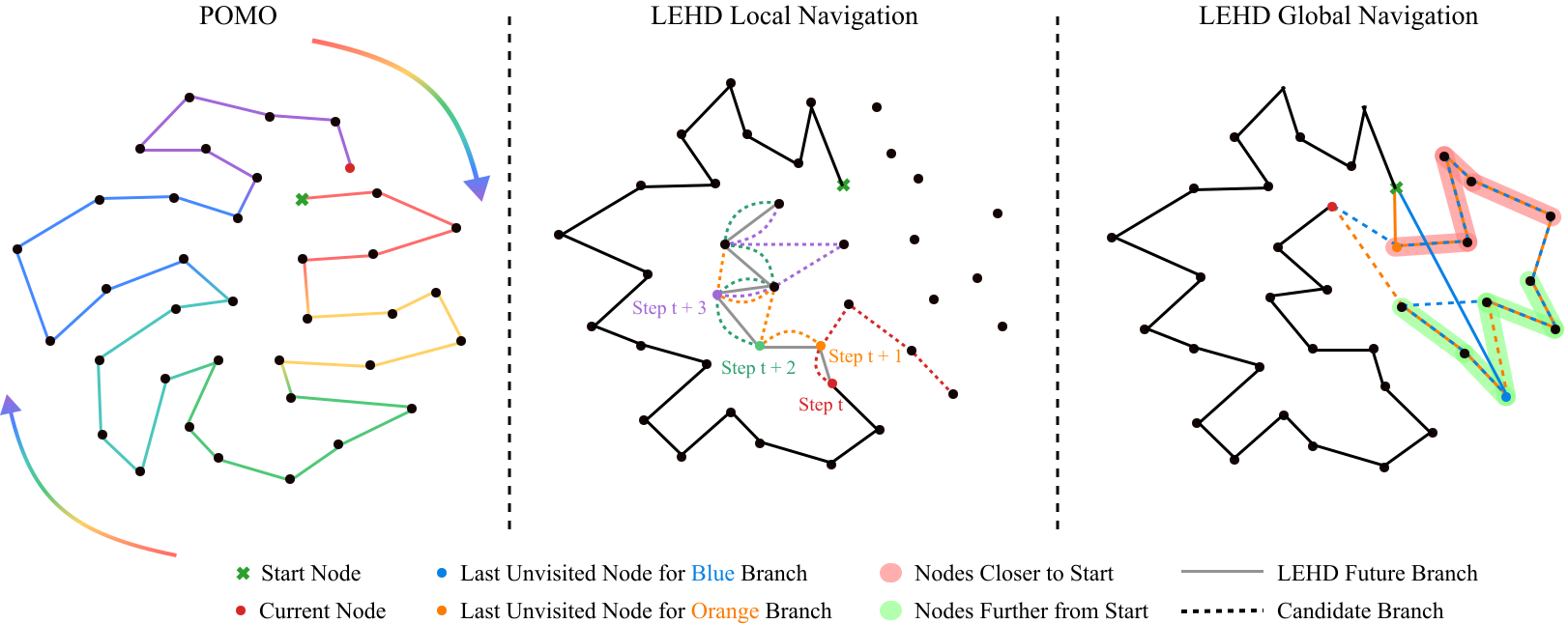
Neural combinatorial optimization models can learn strong heuristics for problems such as the Traveling Salesman Problem and Capacitated Vehicle Routing Problem. Their performance raises a deeper scientific question: if the solver is not given an explicit classical algorithm, what structure is it actually learning?
What algorithmic structure emerges inside a learned solver?
This project treats the neural solver not only as an optimizer, but as an object of scientific investigation. The goal is to connect observed decisions to recurring heuristics and structural properties of the underlying problem.
We study transformer-based neural combinatorial optimization solvers such as POMO and LEHD on TSP and CVRP, combining behavioral analysis, trajectory analysis, probing, and causal interventions.
I led the empirical investigation, designed and ran the probing and causal-intervention experiments, analyzed recurring heuristic patterns, and co-authored the manuscript.
This work connects two questions that motivate much of my research: how can a system discover sophisticated problem-solving strategies, and how can we understand the mechanisms behind what it has discovered? I am particularly interested in whether interpretability can move beyond explaining a model's outputs toward revealing reusable algorithmic ideas.
Manuscript submitted to AAAI 2027. The public project page will be expanded with the actual paper figures and results once the publication materials are ready.